Slip-and-fall injuries are not rare. According to the CDC, these types of falls are among the most common causes of injury, particularly in workplaces and public environments.
Slip-and-fall accidents most often occur on hard, smooth flooring surfaces that lose traction when wet or contaminated, including tile, polished concrete, marble, vinyl, and sealed wood. These materials are common in stores, workplaces, and public buildings because they are durable and easy to maintain, but they also tend to have a lower coefficient of friction, meaning less grip underfoot.
McMath Woods has handled thousands of personal injury claims across Arkansas since 1953, including cases involving unsafe property conditions and preventable falls. In this article, we’ll explain which flooring types are most often involved in these incidents, why they become hazardous, and what should be done to prevent them.
Why Certain Floors Become Dangerous
The key factor in most slip-and-fall incidents is traction, or how well a person’s foot grips the floor. This is measured using the coefficient of friction (COF), which is a standard used to evaluate a surface's slipperiness.
As explained in safety guidance, the coefficient of friction represents the resistance between a shoe and a walking surface; lower values mean a higher risk of slipping (Inspecting Slip-Resistant Flooring in Commercial Buildings - InterNACHI®).
Research also shows that floor type alone is not the only issue. Conditions such as water, grease, or cleaning residue significantly increase risk, especially on smooth surfaces.
Flooring Types Most Commonly Linked to Slips and Falls
Tile Floors (Ceramic and Porcelain)
Tile is among the most common causes of slip-and-fall accidents. It is widely used in:
- Grocery stores
- Restaurants
- Bathrooms
- Entryways
Tile becomes particularly hazardous when wet. Even surfaces that appear safe when dry can lose traction quickly when exposed to water or cleaning solutions.
Polished Concrete
Polished concrete is common in retail stores, warehouses, and commercial buildings. While durable, it is often finished to a smooth surface that can become slippery under changing conditions. Spills, tracked-in rainwater, or cleaning products can significantly reduce traction.
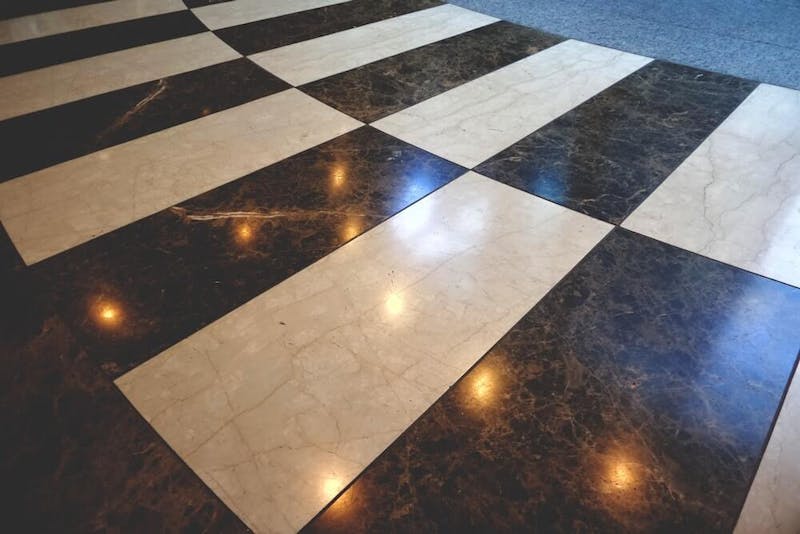
Marble and Natural Stone
Marble and stone flooring are frequently used in:
- Hotels
- Office lobbies
- High-end commercial spaces
These materials are often polished for appearance, which reduces surface friction. As OSHA notes, slips on walking-working surfaces are a leading cause of workplace injuries, particularly when floors are not properly maintained.
Vinyl and Linoleum
Vinyl flooring is common in:
- Hospitals
- Schools
- Commercial kitchens
Although it can be manufactured with slip-resistant textures, it often becomes dangerous when:
- Recently waxed or polished
- Wet from spills
- Worn down over time
Maintenance practices play a major role in whether vinyl flooring is safe.
Hardwood and Sealed Wood
Wood floors are common in both residential and commercial settings. When sealed or polished, they can become slick, especially when moisture is present. Even small amounts of water, such as from shoes or cleaning, can create hazardous conditions.
Conditions That Increase the Risk
Across all flooring types, most slip and fall accidents involve environmental or maintenance-related factors, including:
- Wet or recently cleaned floors
- Grease or oil buildup
- Dust or debris
- Lack of proper entry mats
- Poor lighting
- Failure to warn of hazards
The CDC identifies spills, wet surfaces, and poor housekeeping as common causes of slip-related injuries.
Where These Accidents Most Often Occur
Slip and fall incidents are more likely in places where smooth flooring and foot traffic intersect, such as:
- Grocery stores
- Restaurants
- Hospitals
- Hotels
- Office buildings
- Retail spaces
In these environments, hazards develop quickly and must be addressed just as quickly.
When Flooring Becomes a Legal Issue
A floor does not have to be inherently dangerous to create liability. What matters is whether the property owner took reasonable steps to keep it safe.
That may include:
- Inspecting floors regularly
- Cleaning hazards promptly
- Using slip-resistant materials or treatments
- Posting warnings when conditions are unsafe
When those steps are not taken, preventable injuries can occur.
Start With a Clear, Honest Evaluation
Not every fall leads to a claim. But when a property owner fails to address a known risk—or allows unsafe conditions to persist—the consequences can be serious.
At McMath Woods, our approach is different by design. We take on a limited number of cases so we can give each one focused attention. Clients work directly with attorneys—not case managers—and often have two to three lawyers collaborating on their case. Much of our work comes through referrals from other attorneys, reflecting the trust placed in our ability to handle complex and contested matters.
If you’re trying to understand whether your situation warrants that level of attention, you can call 501-530-4320 to speak directly with an attorney.